


 Language: English











Solutions
Horse Construction offers full range of structural strengthening materials with technical supports, documentation supports, products supports, project supports.
Carbon Fiber Strengthening Fire-Damaged Structural Members

When structures are exposed to fire, high temperatures will cause irreversible damage to their components, leading to a sharp decline in bearing capacity and safety risks.

Main Damage to Structural Members Caused by Fire
Fire-induced high temperatures (usually exceeding 300℃) will damage concrete, steel bars and the bonding interface between them, and the specific damage manifestations are as follows:
Concrete Damage
1) Strength attenuation: High temperature causes dehydration of cement hydration products, decomposition of calcium hydroxide, and internal pore expansion, resulting in a 30%–80% reduction in compressive strength (the higher the temperature, the more serious the attenuation).
2) Surface spalling and cracking: Thermal expansion and contraction of concrete cause internal stress concentration, leading to surface peeling, crack propagation, and even loss of integrity in severe cases.
3) Corrosive environment formation: Post-fire concrete will produce alkaline residues and loose pores, which are easy to absorb moisture and chloride ions, accelerating the subsequent corrosion of steel bars.
Steel Bar Damage
1) Yield strength reduction: When the temperature exceeds 550℃, the yield strength of ordinary carbon steel bars will drop by more than 50%, and plastic deformation will occur, resulting in structural deformation and displacement.
2) Oxidation and corrosion: High-temperature oxidation forms a loose rust layer on the surface of steel bars; after cooling, the rust layer expands and peels off, further reducing the effective cross-sectional area of steel bars.
3) Bonding failure with concrete: The thermal expansion coefficient difference between steel bars and concrete causes the bonding interface to separate, losing the ability to transfer stress together.
Overall Structural Performance Degradation
1) Reduced bearing capacity, unable to resist design loads such as dead load and live load.
2) Increased deflection and deformation, leading to excessive cracking of components.
3) Brittle failure risk increases, and ductility of structures is significantly reduced.

What can Carbon Fiber Do?
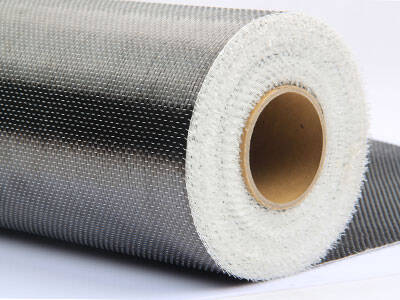
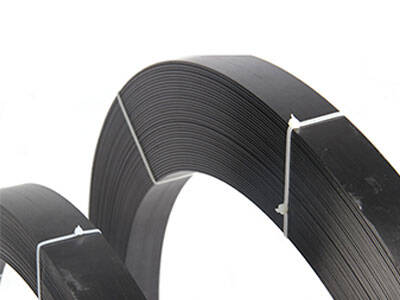
After structures suffer fire damage, concrete, steel bars and the overall structural performance will be severely degraded. Both CFRP sheets (HM-60) and CFRP plates (carbon fiber plates, e.g., HM-1.2t carbon plate) can effectively make up for these defects through their material advantages, restoring and even improving the service performance of fire-damaged structures. Their common compensation effects are as follows:
1. Make up for the loss of tensile and flexural capacity of fire-damaged structures
Fire exposure leads to steel bar yielding, concrete strength attenuation and cracking, which significantly reduces the tensile and flexural capacity of beams, slabs and other components. Both CFRP sheets and plates have ultra-high tensile strength (3–10 times that of ordinary steel). When bonded to the tension side of components, they can bear the main tensile stress, share the load of damaged steel bars, limit the further expansion of cracks, and quickly restore the flexural bearing capacity of the structure. For components with serious damage, the combination of CFRP plates (main flexural reinforcement) and sheets (auxiliary crack control) can achieve a better reinforcement effect.
2. Make up for the defect of poor corrosion resistance of post-fire structures
Post-fire concrete forms a loose pore structure, which is easy to absorb moisture and chloride ions, accelerating the corrosion of internal steel bars. Traditional strengthening methods such as bonded steel are also prone to rust in this harsh environment, leading to secondary damage. CFRP materials are non-metallic, with inherent corrosion resistance, and can resist the erosion of alkaline residues, moisture and chloride ions in fire-damaged concrete. Whether it is a sheet or a plate, after bonding, it can form a protective layer on the concrete surface, isolate the contact between steel bars and corrosive media, slow down the corrosion rate of residual steel bars, and avoid repeated maintenance.

3. Make up for the defect of additional load increase caused by traditional strengthening methods
Traditional strengthening methods such as section enlargement and bonded steel will significantly increase the dead load of the structure, which is easy to cause overload of fire-damaged components with reduced bearing capacity, leading to secondary damage. The density of CFRP sheets and plates is only about 1/5 of that of steel, and the additional weight after reinforcement is negligible. This lightweight advantage can avoid increasing the burden on the damaged structure, ensuring the safety of the reinforcement process.
4. Make up for the defect of poor construction adaptability of fire-damaged components
Fire-damaged components often have irregular surfaces due to spalling and cracking, which brings difficulties to the construction of traditional strengthening methods. CFRP sheets are flexible and can be closely attached to the uneven surface of components; CFRP plates have certain rigidity but can be cut according to the size of components, and can be perfectly fitted with flat components such as beam bottoms and slab surfaces. Both materials do not require on-site welding or formwork support during construction, and the construction process is simple and efficient, which is suitable for the emergency repair of fire-damaged structures.
5. Make up for the defect of insufficient ductility and seismic performance of fire-damaged structures
Fire damage will reduce the ductility of structures, making them prone to brittle failure under external loads such as earthquakes. When CFRP sheets are used to wrap components (U-shaped wrapping or full wrapping), they can form a hoop constraint effect, compress the concrete core, and improve the shear capacity and ductility of components; CFRP plates can enhance the overall stiffness of the structure. The combined use of the two can further improve the seismic performance of fire-damaged structures, making them more resistant to external impacts.
Project:
Carbon Fiber Repair and Reinforcement of Industrial Factory Structures Damaged By Fire
You can find anything here you are in need of, have a trust trying on these products, you will find the big difference after that.

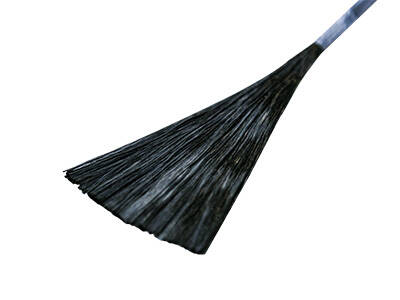
High strength, unidirectional carbon fiber fabric pre-saturated to form a carbon fiber reinforced polymer (CFRP) fabric used to strengthen structural concrete elements.

High strength, unidirectional carbon fiber sheet pre-saturated to form a carbon fiber reinforced polymer (CFRP) sheet used to strengthen structural concrete elements.

High strength unidirectional carbon fiber fabric for concrete repair and structural strengthening
