


 Language: English











Solutions
Horse Construction offers full range of structural strengthening materials with technical supports, documentation supports, products supports, project supports.
Carbon Fiber Reinforcement for Load Increase from Heavy Machinery Installation in Industrial Buildings

Common Scenarios That Increase Heavy Machinery in Industrial Buildings
Production line expansion and capacity upgrading
Plants add more processing equipment, assembly lines, or automated systems to improve output, directly increasing static and dynamic loads.
Introduction of new, larger, or heavier equipment
New-generation machinery is often heavier, larger, and more powerful than older models, exceeding the original structural design load.
Relocation or rearrangement of existing heavy equipment
Moving machines to different areas changes load distribution, creating new concentrated loads on slabs and beams not originally designed for them.
Increase in working frequency, pressure, or operating load
Even the same equipment may run at higher speed, pressure, or load, amplifying vibration and dynamic effects on the structure.
Addition of auxiliary equipment and supporting systems
New compressors, pumps, transformers, material storage units, and auxiliary devices further increase total building load.
Change of production process or industry transformation
Factory restructuring, product upgrades, or industry shifts often require heavier machinery, leading to sudden load growth.
Long-term equipment accumulation and multi-layer stacking
Over years of operation, accumulated machinery, materials, and utility systems gradually overload the original structure.
Heavy Machinery Installation Causes Critical Load Increases
Heavy machinery introduces multiple load effects that challenge existing structures:
Static load increase: Dead weight of equipment, bases and auxiliary units exceeds original design live load and dead load.
Dynamic & impact load: Vibration, periodic operation and startup-shock amplify internal forces in beams and slabs.
Concentrated load: Equipment footings create high local stress, risking punching shear failure on floors.
Service load change: Process upgrades, material stacking and operational shifts further raise total load demand.
Unaddressed, these overloads accelerate structural degradation, shorten service life and violate building code safety. Timely reinforcement is mandatory to ensure operational stability and personnel safety.

Why Carbon Fiber (CFRP) Is the Optimal Solution for Load Increase
Carbon fiber reinforced polymer (CFRP) systems outperform traditional methods (increasing section, bonding steel, encased steel) for industrial building reinforcement under heavy machinery loads:
Ultra-high strength-to-weight ratio: Tensile strength reaches 3,400–4,400 MPa (7–10 times that of steel), while adding almost no self-weight. It avoids secondary load on foundations and substructures.
Thin & non-intrusive: CFRP sheets/plates are only ~0.1–1.4 mm thick, preserving headroom, equipment clearance and architectural layout.
Fast construction with minimal downtime: No heavy machinery, wet work or long curing. Installation can be done during off-hours to reduce production interruption.
Excellent durability: Corrosion-resistant, moisture-proof and fatigue-tolerant; ideal for harsh industrial environments (chemical, humid, high-vibration).
Flexible application: Applied to beams, slabs, columns and joints; adaptable to irregular surfaces and confined spaces.
For industrial buildings undergoing heavy machinery installation, CFRP reinforcement reliably upgrades flexure, shear and punching capacity to match new load conditions.

Typical Applications in Industrial Buildings
Floor slab reinforcement: Boost flexure and punching shear capacity for concentrated equipment loads.
Beam strengthening: Upgrade flexure and shear with bottom sheets and U-wrap strips.
Column retrofitting: Enhance axial load and seismic performance via full wrapping.
Joint & connection reinforcement: Improve integrity under dynamic machinery vibration.
You can find anything here you are in need of, have a trust trying on these products, you will find the big difference after that.

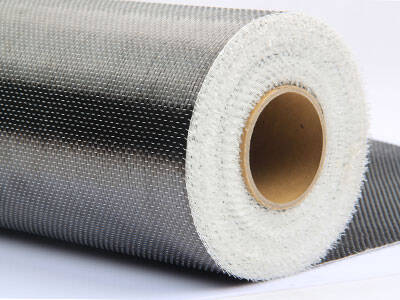
High strength, unidirectional carbon fiber wrap pre-saturated to form a carbon fiber reinforced polymer (CFRP) wrap used to strengthen structural concrete elements.

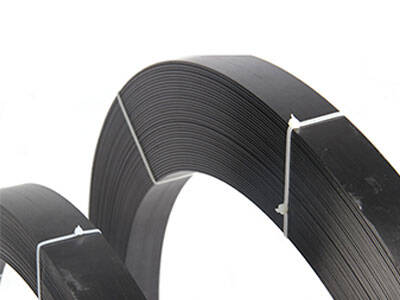
High strength carbon fiber reinforced polymer (CFRP) strip / laminate / plate for structural strengthening and concrete repair

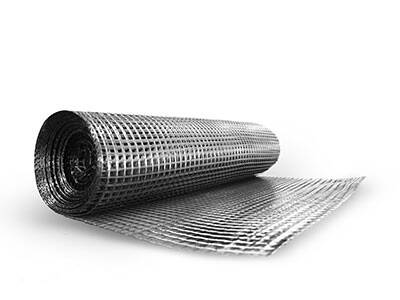
High strength, unidirectional carbon fiber fabric pre-saturated to form a carbon fiber reinforced polymer (CFRP) fabric used to strengthen structural concrete elements.
