


 Language: English











Solutions
Horse Construction offers full range of structural strengthening materials with technical supports, documentation supports, products supports, project supports.
How To Quickly Calculate The Amount Of Carbon Fiber Wrapped Beam?

The calculation logic for carbon fiber reinforcement of beams is the same as that for columns. The core is to calculate the surface area that needs to be wrapped, and then consider the number of layers and losses. In engineering, four common methods are bottom wrapping, U-shaped hoops, side reinforcement, and full wrapping. Below are general quick formulas and complete examples that you can apply directly.

I. Core Calculation Prerequisites
Only the effective area of the carbon fiber reinforcement is calculated. The upper and lower ends of the beam and the nodes where it intersects with columns/walls are generally not calculated repeatedly.
The formula defaults to one layer of unidirectional carbon fiber. For multiple layers, simply multiply by the number of layers.
In actual material preparation, it is recommended to add 5%~10% for overlap and cutting losses. For typical projects, 10% is used.
Beam foundation dimensions: beam width b, beam height h, reinforcement length L (unit: meters).
II. Common Beam Strengthening Methods & Quick Calculation Formulas
Carbon fiber reinforcement for beams in engineering can be categorized into four main types, each with different applicable scenarios and formulas. Choose the appropriate method based on your needs:
| Reinforcement Methods | Applicable Scenarios | Formula for Carbon Fiber Area of a Single Beam | Core Explanation |
| One-way bonding at the bottom of the beam | For beam flexural strengthening, only the flexural bearing capacity needs to be increased. | S=b*L | Apply only to the bottom surface of the beam; this is the most common and material-saving method. |
| U-shaped stirrup reinforcement (beam bottom + both sides) | Beam shear reinforcement, or a combination of bending and shear resistance, to prevent delamination. | S=(b+2h1)*L | h1 is the height for side pasting, used when it's not full height; for full height, h1 = h |
| Double-sided bonding (only on both sides) | For beams primarily subjected to shear, or for reinforcement of side cracks. | S=2h1*L | Only the bottom of the beam is not pasted; vertical pasting is only applied to both sides. |
| Full enclosure (beam bottom + sides + top surface) | The beam's load-bearing capacity is severely insufficient; closed-restraint reinforcement is required. | S=2(b+h)*L | Similar to a square column fully enclosed, forming a closed band, this method uses the largest amount of material. |
Key Note: If the U-shaped hoop is intermittently arranged (not continuously pasted, but with spaced hoop plates), calculate the area of a single hoop plate first, then multiply by the total number of hoop plates; for continuous pasting, use the formula above directly.
OK, here is a sample
Beam dimensions: Width b = 0.3m, Height h = 0.6m, Reinforcement length L = 8m, 5 identical beams in total.
1. One-way bonding at the bottom of the beam (bending resistance only)
Single beam area:
Single:S=b*L
S=0.3*8
S=2.4 ㎡
Total area of 5 beams:
Total=2.4*5=12 ㎡
Add 10% wastage allowance:12*1.1㎡, approximately 13.2㎡ of material is required.

2. U-shaped hoop reinforcement (bending resistance + shear resistance, full-height side)
Single beam area:
Single:S=(b+2h1)*L
S=(0.3+2*0.6)*8
S=1.5*8=12㎡
Total area of 5 beams:
Total: 12*5=60 ㎡
Add 10% wastage allowance:60*1.1㎡, approximately 66㎡ of material.
3. Double-sided bonding (shear resistance only, full-height side)
Single beam area:
Single: S=2h1*L
S=2*0.6*8
S=9.6㎡
Total area of 5 beams:
Total: 9.6*5=48 ㎡
Add 10% wastage allowance: 48*1.1㎡, approximately 52.8㎡ of material needed.

4. Full-Wrap Reinforcement
Single Beam Area:
Single: S=2(b+h)*L
S=2*(0.3+0.6)*8
S=14.4㎡
Total Area of 5 Beams:
Total 14.4*5=72㎡
Add 10% Waste Material: 72*1.1㎡, Material preparation approximately 79.2㎡.
IV. Quick Algorithm for Intermittent Arrangement of U-Shaped Stirrups on Beams
If the U-shaped stirrups are not applied along the entire length, but rather at intervals, the steps are as follows:
Calculate the area of a single U-shaped hoop: s = (b + h1) * hoop width
Calculate the total number of reinforcements: N = (reinforcement length / hoop spacing) + 1 (reinforcement is required at both ends, rounded up)
Total area of a single beam: S=s*N
Total usage × number of beams, plus wastage.
You can find anything here you are in need of, have a trust trying on these products, you will find the big difference after that.

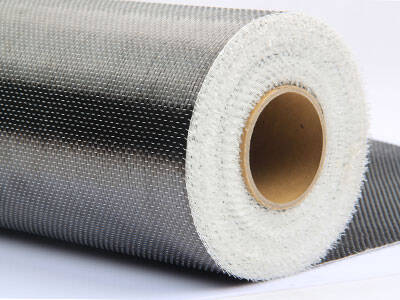
High strength, unidirectional carbon fiber wrap pre-saturated to form a carbon fiber reinforced polymer (CFRP) wrap used to strengthen structural concrete elements.

High strength, unidirectional carbon fiber fabric pre-saturated to form a carbon fiber reinforced polymer (CFRP) fabric used to strengthen structural concrete elements.

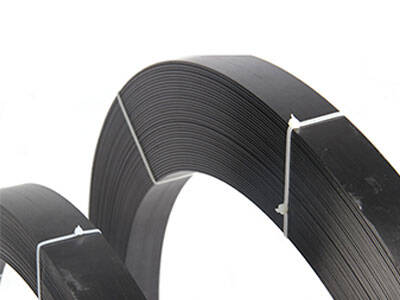
High strength, unidirectional carbon fiber sheet pre-saturated to form a carbon fiber reinforced polymer (CFRP) sheet used to strengthen structural concrete elements.
