


 Language: English











Solutions
Horse Construction offers full range of structural strengthening materials with technical supports, documentation supports, products supports, project supports.
According To ACI Standards, What Are The Most Important Data For Carbon Fiber Reinforcement?
1.Ultimate Tensile Strength of Carbon Fiber
Why it's important:
It directly determines how much additional load the reinforced component can withstand and is fundamental to calculating the increase in bending and shear bearing capacity.
ACI Requirements:
Must be obtained through ASTM D3039 testing;
Design strength = (Ultimate tensile strength of carbon fiber * Environmental reduction factor) / Material partial safety factor
2. Limiting Tensile Strain
Why it's important:
CFRP is a brittle material, and its failure is strain-controlled. ACI 440.2R strictly limits the design strain to no more than 0.008 (i.e., 0.8%), even if the actual measured strain of the material is higher (e.g., 1.7%), to prevent sudden delamination failure.
ACI stipulation (Section 10.2.3):
“The design strain in the FRP shall not exceed 0.008, regardless of the ultimate strain of the material.”
Impact:
The actual effective strength is often controlled by the strain limit, rather than the material's ultimate strength.
3. Elastic Modulus
Why it's important:
Determines the collaborative working ability (strain compatibility) of CFRP with concrete/reinforcement;
Influences crack control, stiffness enhancement, and long-term deformation prediction.
ACI Applications:
Used to calculate the neutral axis position of the cross-section, FRP stress development, and whether "premature debonding" occurs.
4. Environmental Reduction Factor
Why is it the most important?
This is the core safety mechanism that distinguishes ACI from other standards. It reduces the strength obtained under ideal laboratory conditions to a reliable design strength under actual service conditions.
How to determine it:
Based on the strength retention rate after aging tests (ASTM D3045/D5229) under conditions of humidity, alkali, and freeze-thaw cycles, refer to ACI Table 3.2.1.
5. FRP-Concrete Interface Bond Performance
Why it's critical:
Debonding is the most common and dangerous failure mode in CFRP reinforcement, often occurring before the materials reach their full strength.
ACI requirements:
Bond shear strength must be tested according to ASTM C882;
End anchorage length and U-shaped stirrup configuration must be verified in the design to prevent debonding.
Implicit data:
Effective stress transfer length, critical debonding strain.
You can find anything here you are in need of, have a trust trying on these products, you will find the big difference after that.

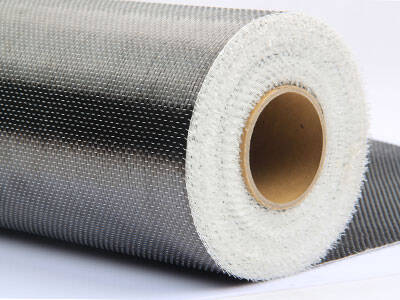
High strength, unidirectional carbon fiber wrap pre-saturated to form a carbon fiber reinforced polymer (CFRP) wrap used to strengthen structural concrete elements.

High strength, unidirectional carbon fiber fabric pre-saturated to form a carbon fiber reinforced polymer (CFRP) fabric used to strengthen structural concrete elements.

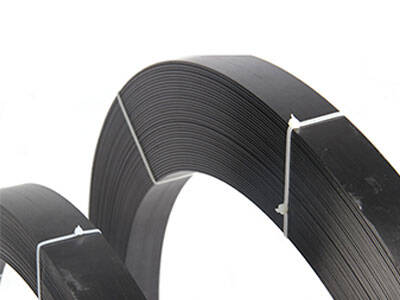
High strength, unidirectional carbon fiber sheet pre-saturated to form a carbon fiber reinforced polymer (CFRP) sheet used to strengthen structural concrete elements.
